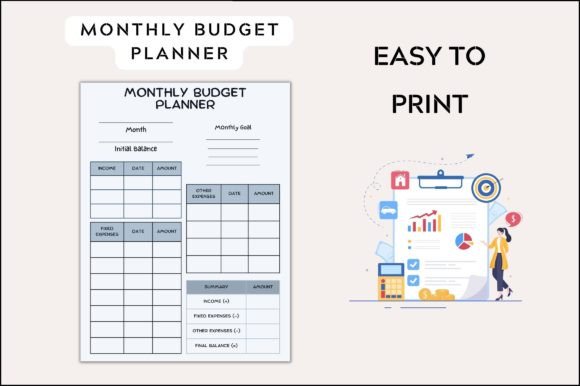
Monthly Budget Planner: A Designer's Guide to Financial Clarity
Every creative project, from a complete brand identity overhaul to a single social media graphic, begins with a plan. That plan extends beyond aesthetics and into resource allocation, making a structured Monthly Budget Planner an indispensable tool for any designer, marketer, or business owner. It transforms abstract financial goals into a clear, actionable visual roadmap, ensuring your creative projects are not only beautiful but also financially sustainable.
The Role of Budgeting in Visual Communication
Effective design is about solving problems and communicating messages. A well-designed budget planner does exactly that for your finances. It applies core principles of visual design—like hierarchy, clarity, and consistency—to data that is often overwhelming. By organizing income, expenses, and savings into a clean layout, you create a document that is easy to understand at a glance, reducing cognitive load and empowering smarter decisions. This is the essence of good UX design: making a complex process intuitive and user-friendly.
Practical Applications for Creative Professionals
Integrating a budget tracker into your workflow has direct benefits for your creative output and business health. Consider how a printable template streamlines these areas:
- Project Management: Allocate funds for software subscriptions, stock assets, freelance collaborators, and printing costs for each client project.
- Business Operations: Track overhead for a home studio, marketing expenses for digital marketing campaigns, and investments in new creative assets.
- Personal Branding: Manage a budget for developing your own portfolio website, professional development courses, or attendance at design conferences.
- Client Presentations: Use a polished, printed budget sheet as part of a professional presentation to demonstrate fiscal responsibility and build trust.
Designing a Planner That Works for You
When selecting or evaluating a Monthly Budget Planner Tracker Template, apply the same critical eye you would to any graphic design project. The goal is a tool that is both functional and aesthetically aligned with your working style.
Key Considerations for Selection:
- Visual Hierarchy & Readability: The template should guide your eye naturally to the most important numbers. Look for clear typography, ample white space, and a logical flow from income to expenses to totals.
- Color Palette & Psychology: A thoughtful color palette can reduce stress and improve focus. Soft, neutral tones promote calm, while strategic accent colors can highlight critical sections like due dates or savings goals.
- Scalability & Flexibility: Choose a format that grows with you. A template in a standard size like A4, available as a digital download in PDF, allows for easy printing and scaling without losing design integrity.
- Consistency with Your Brand: If you use it in a professional context, the planner's aesthetic should complement your existing brand identity, reinforcing a cohesive and organized image.
Tips for Effective Use:
- Schedule a "Budget Review": Treat it like a client meeting. Block time each week to update your tracker, ensuring it remains a living document.
- Customize Categories: Tailor the expense categories to reflect your specific creative workflow, such as "Font Licenses," "Pantone Books," or "Prototype Materials."
- Print and Post: Leverage the power of print design. A physical copy posted in your workspace serves as a constant, tangible reminder of your financial goals.
Ultimately, a thoughtfully chosen budget planner is more than an administrative task—it's a cornerstone of a sustainable creative practice. By applying principles of modern aesthetics and clear information design to your finances, you gain control, reduce anxiety, and free up mental space to focus on what you do best: creating exceptional work. Quality creative assets, whether for a client project or your own business management, are investments that pay dividends in efficiency, professionalism, and peace of mind.